Key Takeaways
Understanding home climate control requires distinguishing between moisture removal and active cooling. Here are the core concepts:
- Dehumidifiers effectively lower relative humidity but do not function as true cooling units.
- Removing moisture improves perceived comfort by allowing sweat to evaporate more naturally.
- Devices like the Aerofy DualCore 20 are engineered specifically for tropical humidity management.
- High temperatures combined with high humidity create a stifling environment that requires both dehumidification and air movement.
- Strategic placement and regular filter maintenance are essential for optimizing the performance of your humidity control systems.
How a dehumidifier works vs. an air conditioner
Many homeowners struggle to understand the distinction between managing moisture and reducing heat. While both appliances use refrigerant cycles, their objectives are fundamentally different, leading to varied results in your living space.
The mechanics of moisture removal
A dehumidifier is tasked with drawing damp air across cold coils, which causes moisture to condense into a liquid collected in a internal tank. This process is essential for preventing mold and musty odors in high-traffic damp areas where air quality often suffers. By pulling water vapor from the environment, the device effectively shifts the local dew point.
Refrigerant cycles in cooling appliances
Air conditioners operate by moving heat from the interior to the exterior, which naturally causes a byproduct of moisture removal as cold air cannot hold as much water. When people wonder if a can dehumidifier cool room model produces similar results, they often overlook that the AC’s primary goal is the extraction of thermal energy from the air.
Why dehumidifiers emit exhaust heat
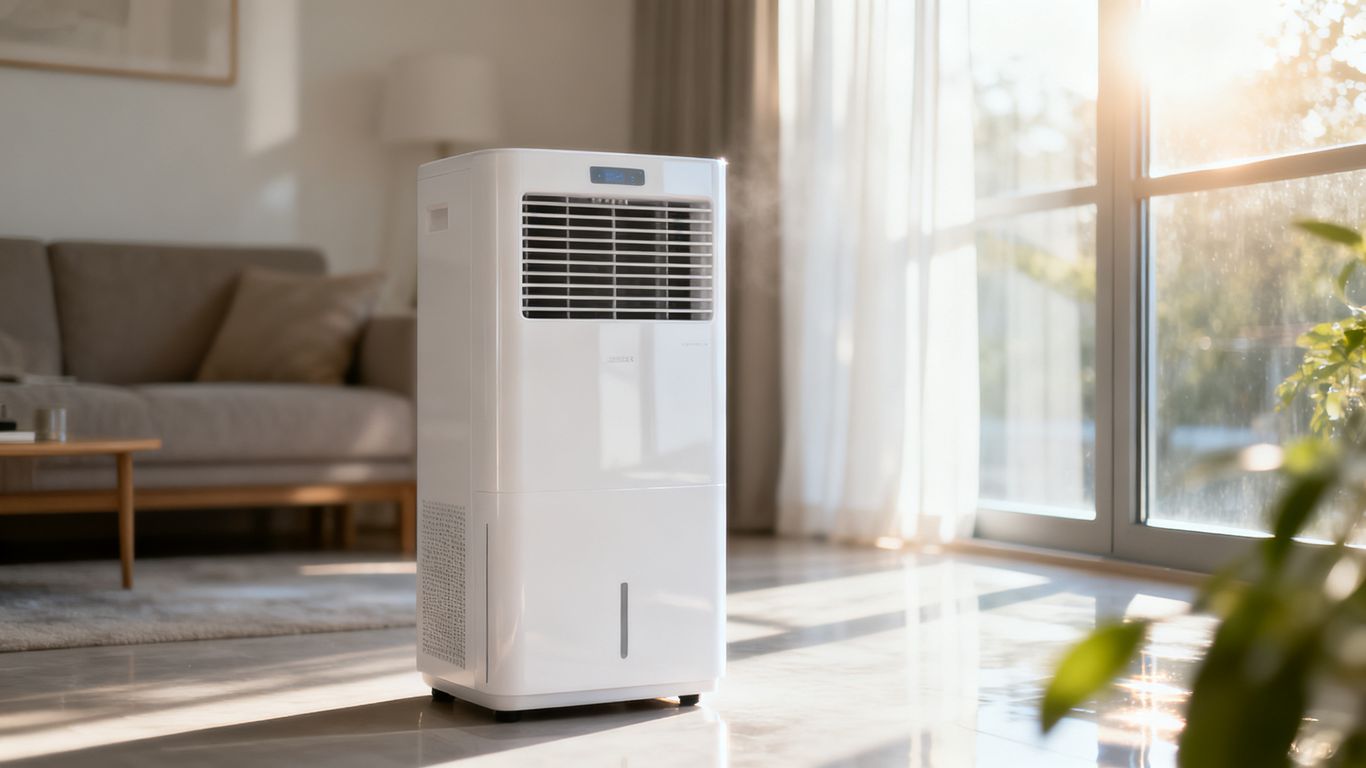
Because dehumidifiers use a compressor to circulate refrigerant, they inevitably generate waste heat as a byproduct of the mechanical process. This is often noticed by users in small, poorly ventilated rooms where the machine’s exhaust air might slightly warm the surrounding environment. While this effect is minor, it is distinct from the cooling output of a designated climate control system.
The relationship between room humidity and human thermal comfort

Human comfort is not merely a function of the thermometer reading, but also the amount of moisture in the air. When the air is saturated, the body struggles to maintain its natural temperature, leading to discomfort even at moderate levels of heat.
How sweat evaporation affects perceived temperature
Our bodies rely on the evaporation of sweat to cool us down naturally, but this process slows down as ambient humidity reaches higher concentrations. When the air is already holding maximum moisture, your skin remains damp, creating that familiar sticky sensation that makes an indoor environment feel oppressive.
The difference between air temperature and heat index
There is a critical divide between the actual numerical temperature and the heat index, which accounts for both heat and humidity. Lowering the relative humidity level makes a massive difference in how we perceive indoor heat. Consider these factors:
- Lower moisture allows for faster sweat evaporation.
- Reduced humidity prevents the air from feeling heavy or stifling.
- Balanced indoor air quality reduces the overall perception of heat stress.
- Lower humidity levels prevent mold and allergen proliferation.
Optimal humidity ranges for indoor comfort
Maintaining a relative humidity between 30% and 50% is generally considered the sweet spot for indoor health. When you stay within this range, you prevent structural moisture issues while ensuring the air remains crisp, light, and comfortably breathable throughout the day.
Factors that cause temperature changes when running a dehumidifier
Running any electric appliance introduces specific chemical and mechanical realities into a closed space. Small changes in ambient temperature are often part of the standard operation of motor-driven units, especially in tight quarters.
Motor heat emission in confined spaces
Internal motors and compressors convert some electrical energy into heat, and in a small storage room or closet, this can influence the ambient temperature. It is a common misconception that this heat indicates a malfunction rather than a typical output of a mechanical process.
Condenser coil discharge and ambient air exhaust
| Process Phase | Effect on Air Output | Impact on Room Temp |
|---|---|---|
| Compressor Operation | Low Heat Input | Slight Warming |
| Moisture Condensation | Cooling Effect | Neutralization |
| Final Air Exhaust | Warm Air Discharge | Net Minimal Increase |
By comparing these phases, it is clear that while the Aerofy DualCore 20 is built for efficiency, the physics of the condensation cycle means some warmth is pushed back into the room.
Impact of room size on temperature regulation
In larger spaces, the heat emitted spreads quickly and becomes imperceptible to residents, whereas, in very small rooms, the air temperature can rise by a few degrees. Choosing the right appliance size for your floor plan helps mitigate this, as you can avoid running the motor longer than necessary for the required job.
Comparing dehumidifiers to air conditioners

It is vital to be realistic about what each device can achieve, as choosing the wrong equipment leads to disappointment regarding utility bills and comfort levels. An appliance designed for water extraction should not be expected to provide the same thermal management as a dedicated chilling system.
Cooling through phase change vs. condensation
Air conditioners focus on large-scale cooling through the rapid cycling of refrigerants, whereas dehumidifiers are refined for the precision capture of water vapor. While a dehumidifier removes moisture as its primary goal, an AC unit prioritizes lowering heat, with dehumidification serving as a secondary benefit.
Why dehumidifiers are not engineered as cooling units
These machines lack the expansive heat exchange capacity required to extract enough heat to cool a standard home. They are purpose-built to stabilize moisture, helping to keep living areas durable and protected against the common problems associated with high-humidity climates.
Determining your actual climate control needs
If your primary goal is to lower the temperature by several degrees, rely on air conditioning systems rather than a secondary dehumidifier. However, for those suffering in the humid tropics, combining a powerful air conditioner with a reliable dehumidifier is often the most effective path to a truly comfortable home.
Tips for managing temperature and humidity simultaneously
Managing a home in a hot, damp environment requires a coordinated effort, particularly when cooling and drying are both priorities. Many users find that understanding the interplay between airflow and moisture is the secret to success when balancing their indoor atmosphere.
Coordinating cooling systems with moisture control
Use your AC to lower the temperature during the hottest hours while relying on your Aerofy DualCore 20 to manage the residual moisture. This two-pronged approach ensures that you don’t overwork your cooling system trying to chase comfort that only humidity removal can provide.
Using fans to improve airflow and cooling effects
Ceiling fans effectively circulate the drier air produced by your dehumidifier. By moving the air, you accelerate the evaporation process across your skin, which enhances the cool, crisp feeling in every room of the house.
Best practices for seasonal indoor climate management
Follow a strict maintenance schedule where you check your filters monthly and clean your tank regularly. This keeps your system running at peak capacity rather than struggling against clogged components which might otherwise increase the radiant heat emitted by the unit.
Scenario Time
Imagine you live in a small, apartment-style home in Singapore, where the afternoon sun hits your living room wall. By early evening, the space feels heavy despite your air conditioning running at 25°C. By introducing a unit that specifically manages moisture, you eliminate the "sticky" feeling that makes the air feel stagnant and stifling, allowing your existing cooling setup to work far more effectively.
Conclusion
A dehumidifier is an indispensable tool for climate control, and while it will not replace an air conditioner as a primary cooling source, its ability to manage humidity creates a fresher and more breathable environment that feels significantly cooler to your body.
Frequently Asked Questions
Does a dehumidifier ever make a room warmer?
Yes, because the unit generates heat during its mechanical operation, you might observe a slight rise in temperature in very small or confined spaces.
Can I use a dehumidifier instead of an air conditioner?
No, you cannot replace your AC with a dehumidifier if your goal is actual cooling; they perform different functions and do not provide equivalent thermal relief.
What is the ideal humidity level for home comfort?
For most indoor environments, maintaining a relative humidity between 30% and 50% is best for preventing mold while ensuring skin comfort.
Does high humidity make my home feel hotter?
Absolutely, because high humidity traps moisture on your skin and prevents the natural cooling mechanism of sweat evaporation, leading to increased discomfort.
Why do I need a dehumidifier if I have an AC?
Even with an AC unit, humidity levels can fluctuate, and a dedicated dehumidifier provides more precise control, reducing energy waste and preventing mold growth in corners or closets.
How long should I run a dehumidifier for best results?
Run your device until the target humidity reach is consistent, and consider using a unit with an automatic sensor to keep energy consumption low.
Does air flow matter when using a dehumidifier?
Yes, ensuring unobstructed airflow around your device’s intake and exhaust vents is crucial for efficient moisture removal and temperature regulation.