Key Takeaways
Dehumidifiers are essential tools for maintaining a comfortable living environment in tropical climates, but they require careful management to balance air quality with energy usage. By understanding how your device consumes power, you can optimize its performance and minimize your monthly electricity costs.
- Dehumidifier energy consumption is primarily driven by the compressor type and the ambient humidity.
- Calculating your running costs requires checking the device’s specific wattage and local electricity tariffs.
- Strategic placement, such as staying away from walls, ensures the unit runs efficiently.
- Proper maintenance, including regular cleaning of filters, prevents performance drops and high power draw.
- Selecting a unit appropriately sized for your living area avoids unnecessary cooling or drying cycles.
Understanding energy consumption in dehumidifiers
Managing indoor humidity is vital for home health, especially in our tropical environment where moisture levels stay high year-round. While you might wonder if a dehumidifier uses a lot of electricity, modern appliances are designed as sophisticated climate control tools. Effectively controlling indoor moisture through careful device selection is the first step toward a drier and more manageable home.
How a compressor dehumidifier works
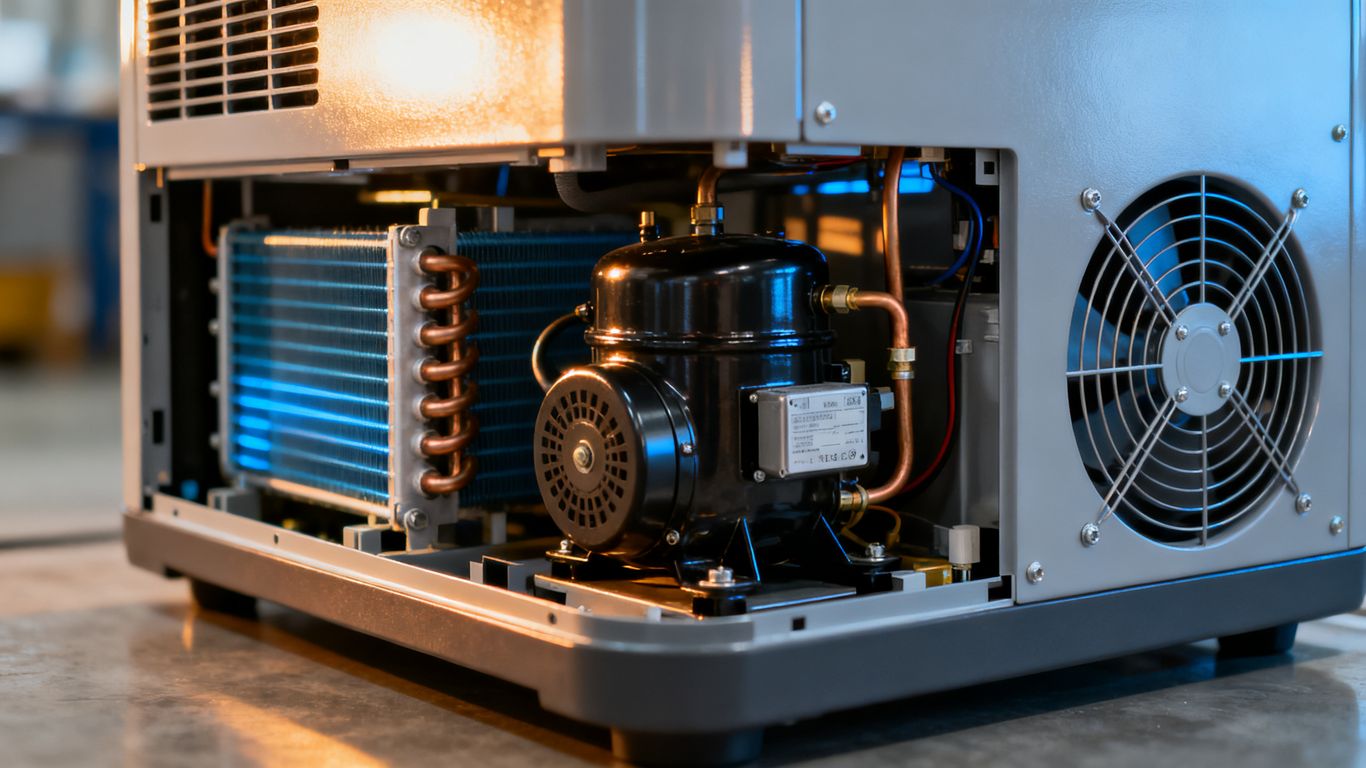
Most household units operate using a refrigeration cycle, similar to your refrigerator or air conditioner. The device pulls air across cold coils, which forces moisture to condense and drip into a tank, while the dry, warm air is released back into the room.
Desiccant versus compressor models
Compressor models are highly effective for most homes, utilizing a rotary compressor system to handle large volumes of water condensation. Desiccant models, by contrast, use a specialized material to absorb moisture, which can be quieter but often lacks the overall extraction speed required for high-humidity living environments.
Factors influencing wattage and power demand
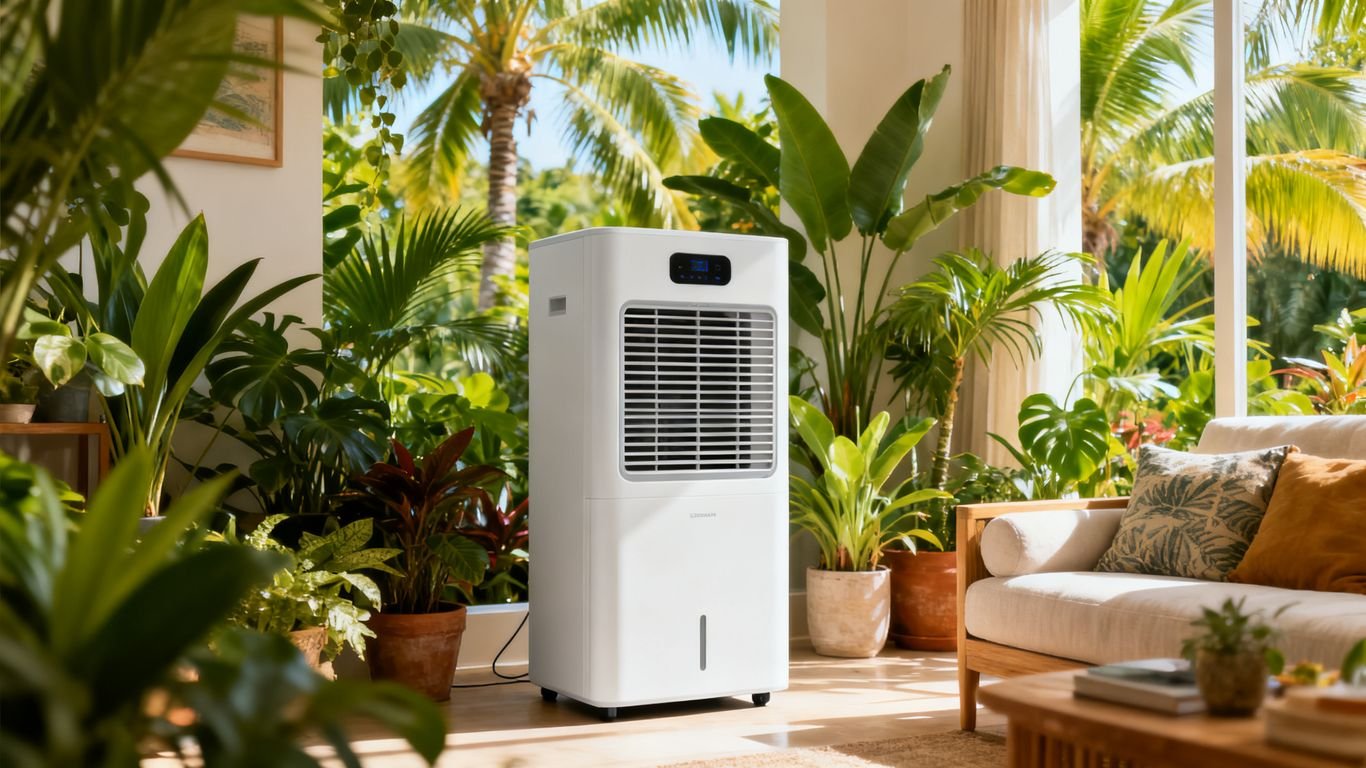
The power draw of a unit depends on the compressor capacity and the fan speed settings. High-performance units like the Aerofy DualCore 20 are engineered specifically for tropical humidity, balancing raw extraction power with intelligent power management to keep energy usage within reasonable bounds.
Calculating the cost of daily operation
Knowing exactly how much your appliance costs to run is much easier once you understand the baseline numbers. By tracking usage patterns and local billing rates, you can take full control of your home moisture management without worrying about unexpected utility spikes.
Finding your device’s wattage rating
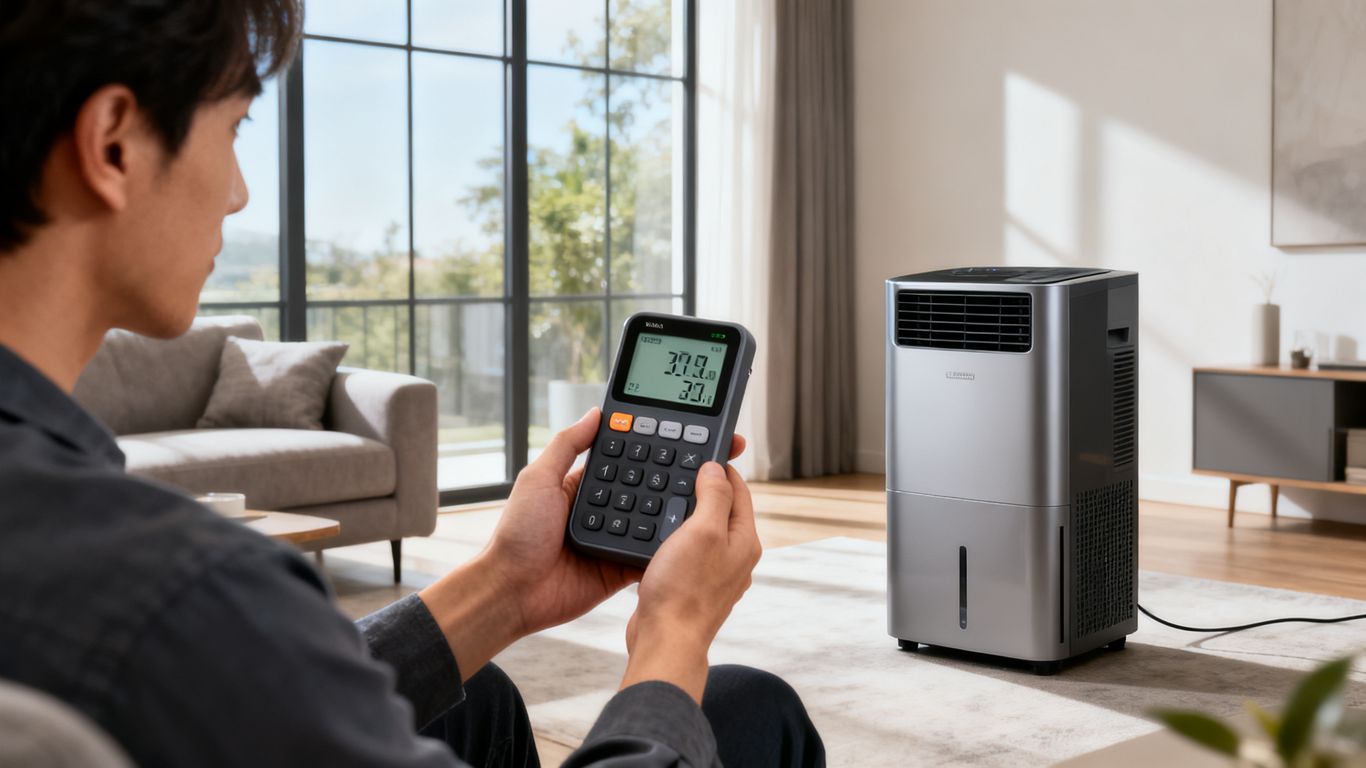
Look at the label on the back or side of your unit, which displays the maximum power consumption in watts. This figure acts as the baseline for your calculations, though actual usage is often lower when the unit’s cycle is managed automatically.
Local electricity rates and utility billing
Most utility bills are charged per kilowatt-hour, or kWh. If you know your device’s wattage, you can divide that number by 1,000 and multiply by the number of hours you operate the device daily to find your daily kWh consumption.
Running the numbers for 24/7 usage
If you decide to leave your device running around the clock, you should anticipate a significant portion of your energy bill going toward moisture control. Use the following framework to understand cost distribution:
| Consumption Level | Estimated Usage (Watts) | Monthly Cost Impact |
|---|---|---|
| Low Power | 250 W | Moderate |
| Medium Power | 450 W | Notable |
| High Power | 700 W | Significant |
These cost estimates highlight why choosing a unit optimized for energy efficiency is so important when living in a climate where the machine runs frequently.
Strategies to minimize power usage
Efficiency is not just about the machine itself, but how you integrate it into your living space. Adopting smart habits allows you to maintain clean, dry air without keeping an appliance on maximum intensity at all times.
Choosing the right size for your space
A common error is selecting a unit that is undersized for the square footage, which causes the compressor to run constantly in an attempt to reach target humidity levels. Proper sizing ensures the unit cycles on and off naturally.
Using internal humidistats effectively
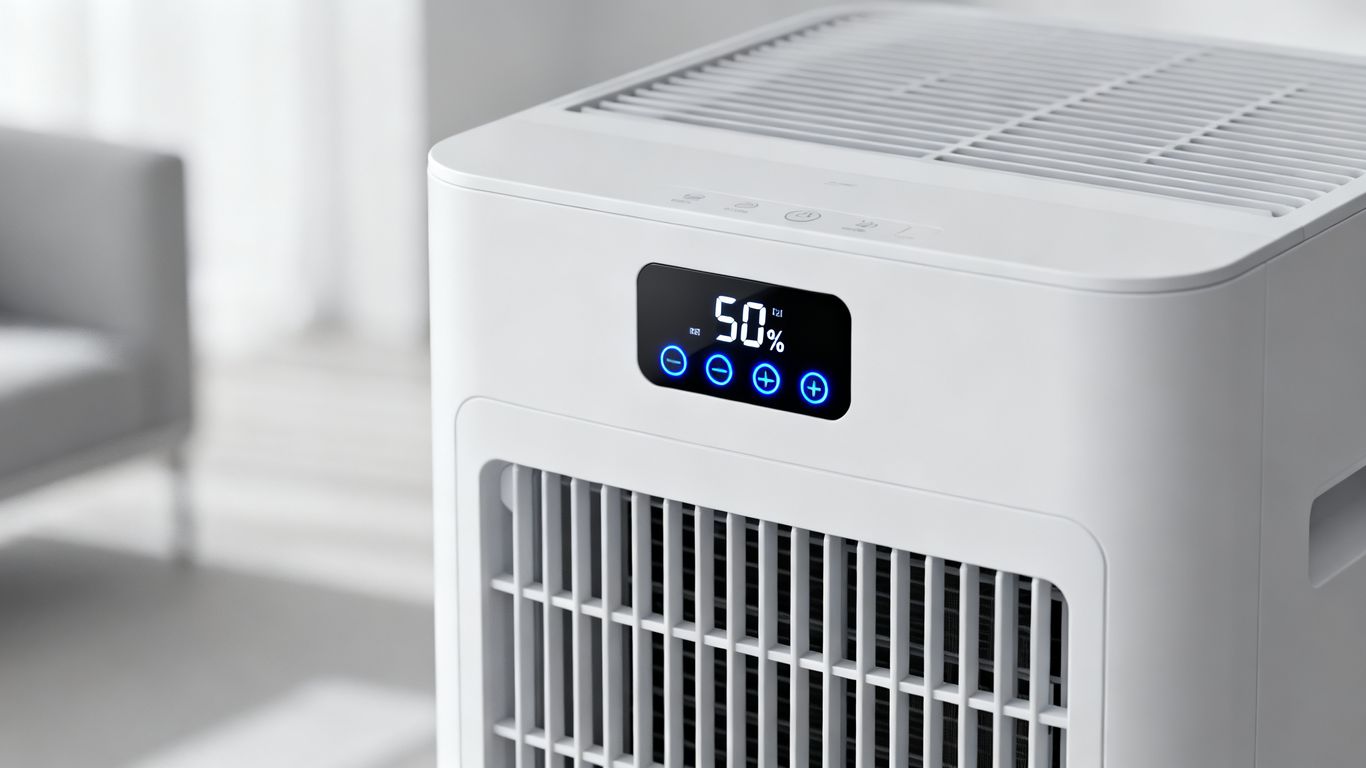
Modern devices allow you to set a target relative humidity, usually between 45% and 55% for optimal comfort. By using a built-in humidistat, you prevent the machine from over-drying the air, which saves electricity since the compressor will pause when the target is reached.
Proper maintenance for peak performance
Dust and debris in the intake vents and filters force your appliance to work harder to pull air through, which directly increases energy draw. Regular maintenance ensures the unit operates with minimal resistance.
- Clean your mesh air filter every two weeks to maintain airflow.
- Wipe down the external housing of the dehumidifier regularly.
- Check the internal water tank for debris or buildup.
- Ensure the condenser coils are free from obstructions.
Routine care like this is the simplest way to extend the lifespan of your appliance and keep your utility bills low.
External factors that impact efficiency
Even the most powerful unit will struggle if it is battling constant moisture intrusion from the outside. Effectively managing your home’s envelope is just as important as the performance testing of the appliance itself.
Ambient temperature and humidity levels
When external humidity is extremely high, your machine consumes more electricity to condense water from the saturated air. In these cases, it is often more efficient to seal the room rather than letting the unit fight the entire house.
Airflow and room positioning
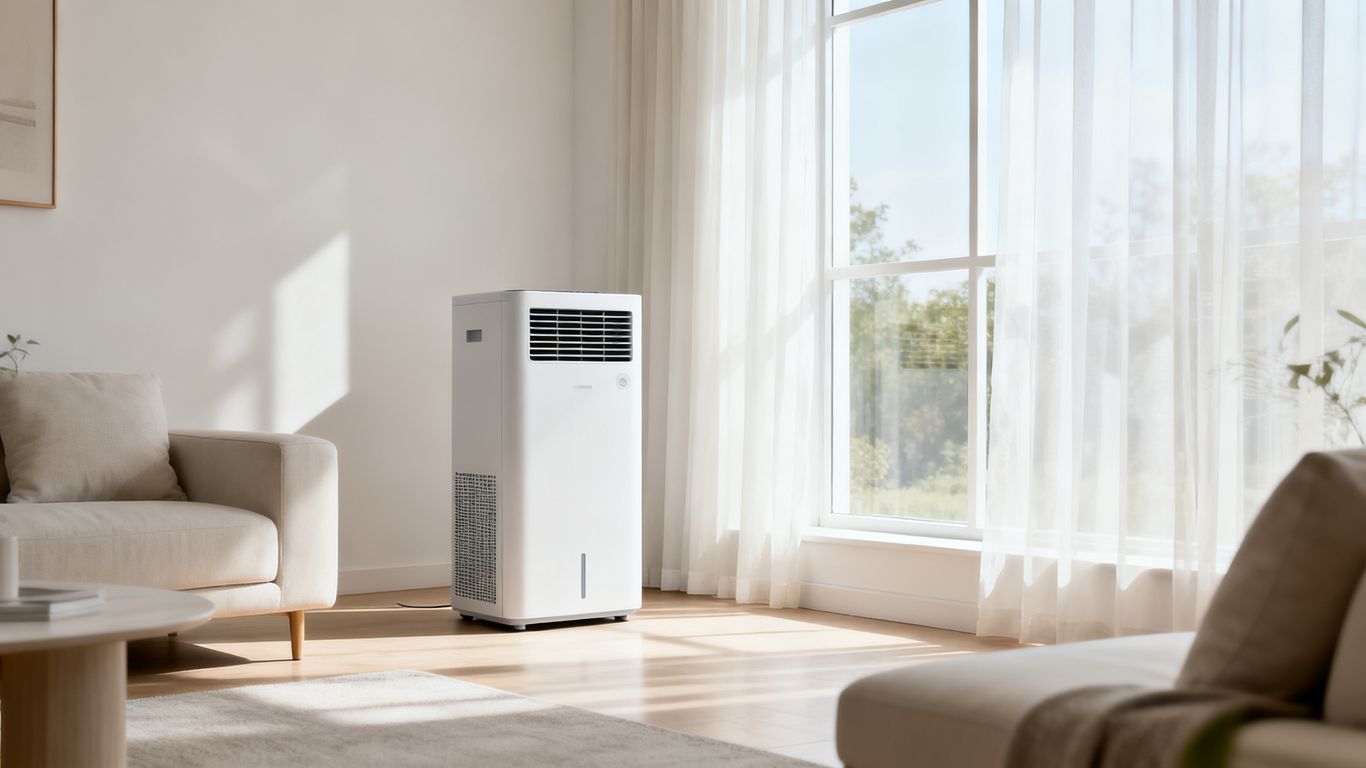
Do not tuck your unit into a corner or behind furniture, as this stifles the air intake. Your device needs clear space on all sides to process air effectively, which allows it to reach the target humidity faster and shut off sooner.
The impact of window and door seals
Drafty windows and gaps under your doors allow humid outside air to flood into your room continuously.
A well-sealed room is the most effective way to lower energy costs, as it allows your dehumidifier to maintain a stable, comfortable environment with significantly less effort than one fighting constant outdoor air intrusion.
Keeping these seals tight effectively turns your room into a controlled climate zone, protecting your indoor air quality while slashing runtime requirements.
Comparing dehumidifier energy efficiency to other appliances
When you compare dehumidifiers to other high-energy home devices, they are actually quite moderate in their consumption. Understanding this context helps buy your dehumidifier with confidence, knowing it is a specialized tool for your specific environmental needs.
Energy consumption versus portable air conditioners
A portable air conditioner must cool the air and expel hot gas through a hose, which requires immense energy compared to simply removing water. Because they do not have to perform the complex thermodynamic work of cooling a space, dehumidifiers are generally much lighter on power.
Dehumidifiers compared to ventilation fans
While a standard ventilation fan uses very little electricity, it often cannot remove deep humidity from carpets and furniture. A dehumidifier provides a deeper level of moisture control, making it a more comprehensive asset for building health than a simple fan.
When to consider whole-home ventilation systems
In larger properties with chronic moisture issues, you might look at whole-home systems that integrate directly with existing ventilation. While the upfront cost is higher, these systems can be more efficient than running multiple portable units in separate rooms.
Conclusion
Taking control of your home’s moisture levels does not have to be an expensive endeavor, provided you choose high-efficiency appliances and maintain them properly. By following these guidelines, you ensure that your investment in climate control yields a cooler, cleaner, and more comfortable environment for your family.
Frequently Asked Questions
Does running a dehumidifier make a room warmer?
Yes, the process of condensing moisture and running a compressor releases a small amount of heat into the room, which can make the space feel slightly warmer.
Should I set my dehumidifier to run continuously?
It is generally not necessary to run the unit 24/7 if your device has an internal humidistat that can maintain a specific percentage, as this prevents excessive cycling.
How do I know if my dehumidifier is energy efficient?
Look for units with an ENERGY STAR rating or those specifically designed for tropical climates, as these often feature more sophisticated power-management circuitry.
Does a smaller dehumidifier cost less to run?
They often use less wattage per hour, but a small unit may run for much longer durations to remove the same amount of moisture as a larger, more efficient, and powerful device.
Is it worth it to run a dehumidifier for mold prevention?
Using a dehumidifier is one of the most effective ways to prevent mold growth, as it removes the moisture that mold and mildew require to thrive in a home.
How often should I empty the water tank?
Emptying the tank depends on the size of your machine and the humidity of the room, but most users find that checking it once a day is adequate for maintaining optimal performance.