Key Takeaways
Selecting the right equipment requires a balance between environmental needs, room volume, and specialized tech. Follow these core principles to maintain ideal indoor conditions:
- Prioritize units with high moisture removal ratings tailored to your local climate.
- Match the machine’s pint capacity precisely to your specific room square footage.
- Ensure your chosen model features continuous drainage options for long-term reliability.
- Keep filters clean to guarantee consistent and efficient air circulation over time.
- Optimize unit placement to avoid any obstruction to the essential airflow paths.
Understanding dehumidifier capacity and power
Selecting the right machine starts with a clear understanding of how these devices manage humidity. A powerful dehumidifier must align with the specific cubic volume of your living environment to function effectively without unnecessary wear on internal components.
Decoding moisture removal ratings in pints
Manufacturers often rate machines by the number of pints of water they can extract from the air within a twenty-four-hour period under standard conditions. In tropical environments, these ratings provide a baseline for performance, though actual output varies based on ambient humidity levels and temperature fluctuations.
Matching unit capacity to square footage
Oversized units may run short cycles, preventing proper humidity reduction, while undersized units struggle to keep up with moisture loads in large rooms. For the Aerofy DualCore 20, engineering tests indicate that matching the extraction capacity to your floor area significantly improves both energy consumption and air stability. Selecting the correct size ensures the compressor cycle remains stable, extending the operational life of the device.
The impact of cubic feet per minute on air flow
Efficiency is driven by the volume of air passing over the cooling coils per minute. Higher air flow ratings ensure that moisture is captured rapidly, preventing stagnation in rooms with poor natural ventilation or those prone to trapped atmospheric humidity.
Identifying moisture sources in your home

Homeowners often overlook subtle signs of moisture before mold or structural issues become visible. Recognizing these indicators early allows for proactive intervention before damage to walls, furniture, or health becomes widespread.
Recognizing typical signs of excess humidity
High humidity often manifests as condensation, a persistent musty smell, or peeling wallpaper in localized areas. Common indicators show where your home requires immediate attention to avoid long-term damage.
| Indicator | Potential Source | Impact Severity |
|---|---|---|
| Condensation on windows | High internal humidity | Moderate |
| Musty odors in closets | Poor air circulation | High |
| Dark spots on ceilings | Water seepage/leaks | Critical |
These signs typically suggest that the local dew point is consistently high, necessitating a dedicated solution like those outlined in this comprehensive guide for climate management.
Addressing damp conditions in basements
Basements frequently serve as primary moisture traps due to their position below grade. Establishing consistent moisture control here is essential for maintaining the integrity of building materials and avoiding mildew growth.
Managing humidity in bedrooms and open-concept areas
Living spaces require quiet, discrete operation along with effective filtration. Residents in humid climates benefit from systems that combine desiccant or compressor technology with true HEPA filtration to remove both moisture and airborne particulates simultaneously.
Essential features for high-performance units
Modern high-performance units move beyond basic extraction by offering precision adjustments. These features ensure that the machine operates only when necessary, saving energy while maintaining the desired atmosphere.
Benefits of continuous drainage options
Gravity-fed hoses or internal tank configurations simplify management for non-stop operation. This functionality is vital for unattended, long-duration dehumidification in areas that collect water rapidly.
Precision control with digital humidistats
Digital humidistats provide granular control over target humidity levels. Users can observe real-world performance metrics such as:
- Active monitoring of relative humidity percentages.
- Automatic cycle initiation during identified spikes.
- Programmable sleep modes to reduce power consumption.
- Dynamic fan speed adjustment for balanced air exchange.
These features are central to the Aerofy DualCore 20, which is carefully calibrated to handle the specific moisture density of tropical living areas.
Prioritizing energy star certification for efficiency
Energy-efficient units reduce operational costs significantly over the lifespan of the machine. Certified models utilize better heat exchangers and advanced compressor logic to deliver maximum moisture removal while minimizing electricity usage.
Operational and maintenance requirements
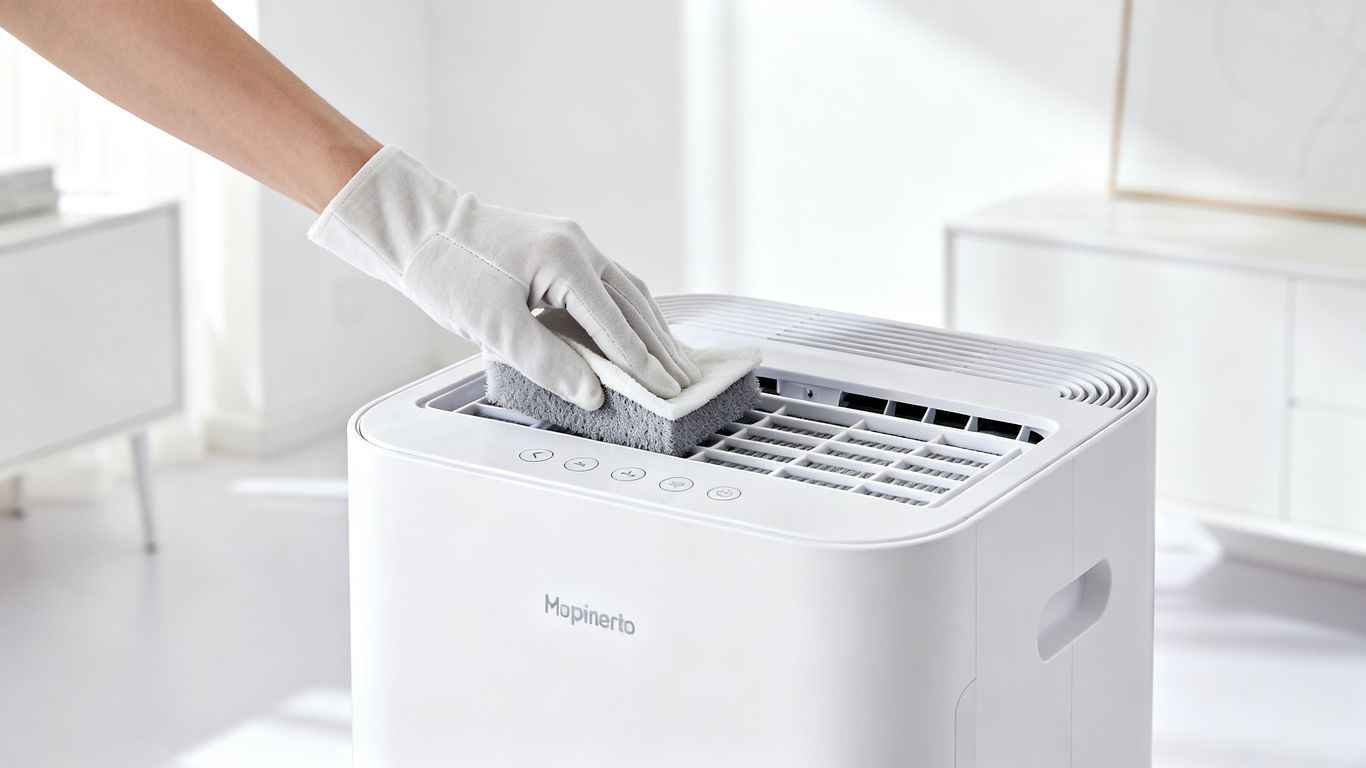
Regular care is the primary variable determining how long your appliance lasts. Neglecting basic protocols often leads to reduced capacity, strange noises, or total mechanical failure.
Establishing a filter cleaning schedule
Filters trap lint and dust, which can act as insulators, causing the unit to work harder to move air. Cleaning your filters bi-weekly ensures that the refrigeration cycle remains unobstructed, maintaining the efficiency of the cooling coils.
Managing noise levels in shared living spaces
Internal fan motors and compressors generate distinct sound profiles. Placing the unit on a level, stable surface can dampen vibration, and some modern compact dehumidifiers incorporate acoustic lining to minimize operational sound in bedrooms or study areas.
The importance of automatic defrost in cold environments
In cooler settings, frost can accumulate on coils, effectively blocking airflow. An automatic defrost command stops the compressor while continuing the fan to melt ice buildup, restarting the process once the coils are clear to resume optimal performance.
Comparing portable versus whole-home systems
Understanding the divide between localized and integrated solutions is crucial for long-term satisfaction. While portable units offer flexibility, whole-house systems provide automated, comprehensive coverage for larger residential layouts.
Benefits of portable compressor dehumidifiers
Portable compressor units excel when you need to switch between rooms, such as drying a laundry room during the day and moving to a bedroom at night. Their versatility is unmatched for targeted moisture control in smaller, distinct areas of a home.
Assessing integrated whole-house solutions
Integrated systems connect directly to HVAC infrastructure to regulate moisture levels across the entire square footage. These solutions are ideal for homeowners seeking a truly passive, low-maintenance environment that removes the need for manual tank emptying.
Comparing installation requirements and upfront costs
Whole-home installations typically require professional assistance, involving ductwork integration and significant upfront capital. Alternatively, portable units have zero installation overhead, reflecting a lower initial investment while requiring more active user involvement in daily maintenance tasks.
Best practices for optimal dehumidifier placement
Proper positioning is more than a matter of convenience; it is a critical engineering requirement. Poor placement restricts air intake and exhaust, causing the system to recycle processed air rather than lowering the humidity of the entire room.
Positioning for maximum air circulation
Place your unit in a central location, away from walls or corners. This positioning encourages the drawing of damp air from the entirety of the room, preventing pockets of high humidity from forming in remote areas.
Factors involving furniture and airflow obstruction
Furniture, curtains, and heavy drapes can easily block the air intake. Ensure that there is a clear, open path around the machine to maintain a steady, unobstructed movement of air.
Maintaining clearance for heat ventilation
Dehumidifiers reject heat as part of the extraction process. Providing at least twelve inches of clearance around the exhaust ensures that this heat dissipates correctly, preventing the unit from overheating or inefficiently circulating warm air back into the processing zone.
Conclusion
Selecting a powerful dehumidifier is an investment in your home’s environmental stability, as these devices prevent long-term damage caused by excess dampness while improving comfort. By carefully considering your room’s requirements and the specific capabilities of your unit, you ensure a healthier, more breathable space for your household.
Frequently Asked Questions
What is the ideal relative humidity level for a home?
A healthy indoor relative humidity typically falls between 40% and 60%, as this range is comfortable for humans and inhibits the growth of mold or dust mites.
How often should I check my unit’s water tank?
If your unit does not use a continuous drainage hose, it should be checked daily, especially during humid weather or when operating in high-moisture rooms like basements or laundry areas.
Why does my dehumidifier emit a musty odor?
A musty odor often indicates that the unit’s filter or internal coils have accumulated dust and mold spores, requiring a thorough cleaning of the filter and possibly professional inspection of the internal tray.
Can I run my dehumidifier 24 hours a day?
Yes, most high-quality units are designed for continuous operation; utilizing a continuous drain hose makes this manageable, eliminating the need for constant tank emptying.
Do I need a different unit for summer and winter?
While some units perform better than others in temperature extremes—such as desiccant models for cool climates—most standard compressor units are efficient throughout the year in warm, humid regions.
Does a dehumidifier replace the need for an air purifier?
While some models, like the Aerofy DualCore 20, offer both, standard dehumidifiers only address moisture; if indoor air particulates are a concern, an integrated solution or a separate purifier is recommended.
Can my unit be used to dry clothes?
Yes, placing a dehumidifier near drying laundry accelerates the removal of moisture from the garments and prevents humidity spikes in the room, speeding up the overall drying process significantly.