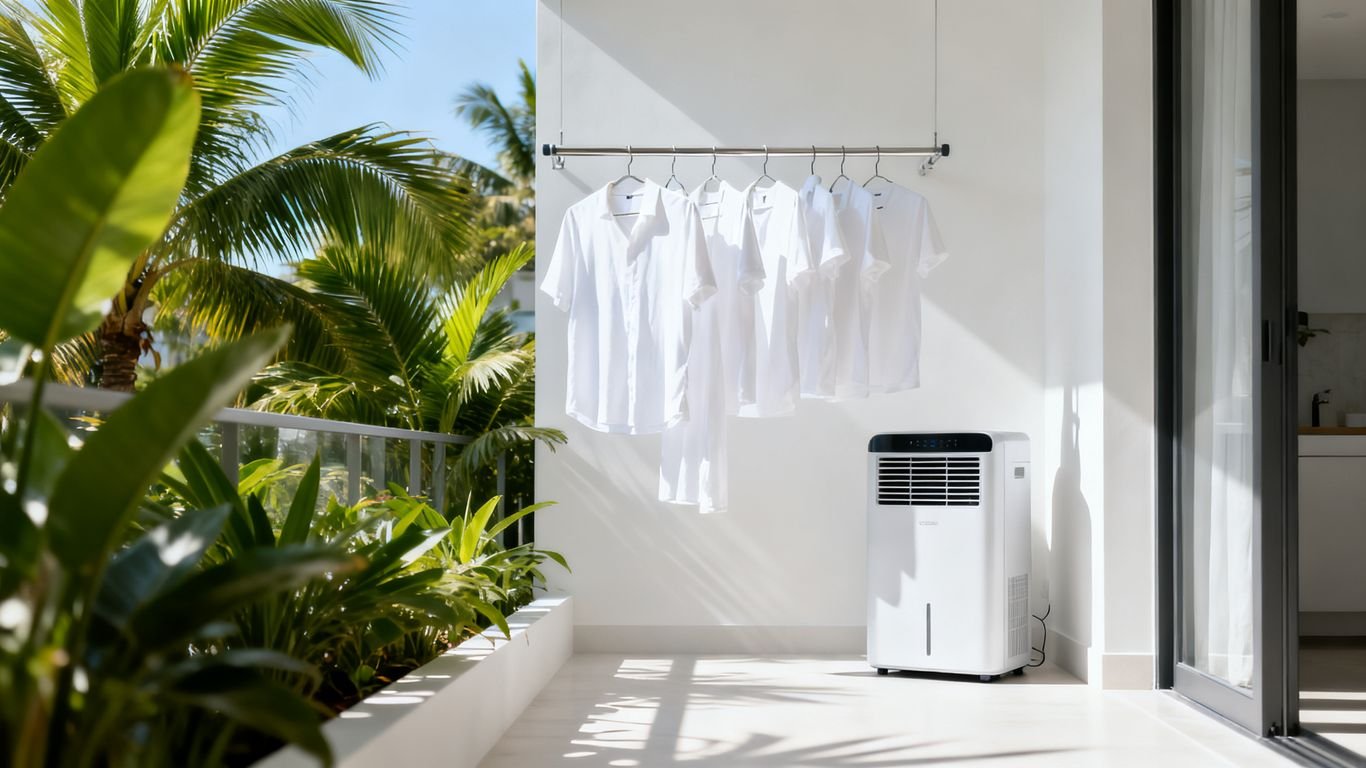
Key Takeaways Drying laundry indoors doesn’t have to be a slow or musty process when you utilize the right appliance settings. Follow these points to optimize your indoor laundry workflow: – Use smaller, enclosed rooms to concentrate warm, dry air. – Maintain target humidity levels at 40-50% for speed. – Position appliances to avoid direct obstruction of airflow. – Keep filters clean to ensure the engine runs efficiently. – Use auxiliary floor fans to distribute dry air evenly. ## Understanding the connection between dehumidifiers and laundry When humidity levels remain high, moisture clings to fabric, preventing evaporation and leaving clothes damp for days. A high-quality device, such as the Aerofy DualCore 20 dehumidifier and air purifier, manages these moisture levels by conditioning the indoor climate. By consistently extracting water from the air, these units create a desert-like condition that forces moisture out of heavy towels and linens much faster than stagnant air ever could. ### How relative humidity impacts evaporation rates When the air is saturated with moisture, it cannot hold any more water vapor, which brings the natural evaporation of wet clothing to a total standstill. For clothes to lose their moisture, the air surrounding them needs to be consistently below 50% relative humidity, which creates a vapor pressure gradient that actively pulls water out of the fibers. ### Why airflow is just as critical as moisture removal Removing moisture from the air is only half the battle; without active circulation, a pocket of damp air will simply linger around your drying rack. We have found that effective air movement works in tandem with the dehumidification process to ensure every item, from thick denim to delicate silk, dries uniformly. ### Comparing desiccant versus compressor dehumidifiers for laundry Compressor units use a refrigeration cycle that is highly effective in warm tropical climates, whereas desiccant models rely on a drying material to pull moisture from the air. For year-round use in Southeast Asia, many residents prefer the efficiency of compressor systems like the ones integrated into the DualCore 20 dehumidifier and air purifier. ## Strategic placement for maximum drying efficiency 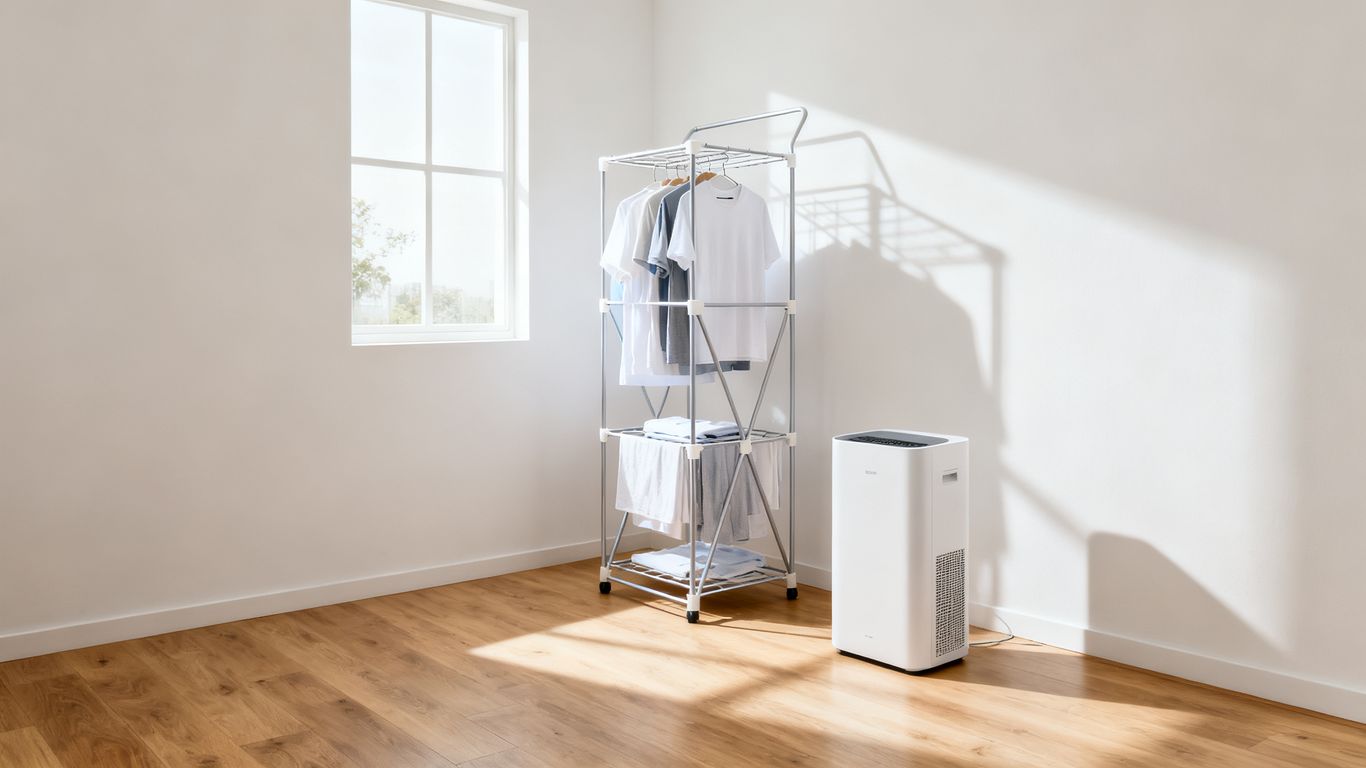 Creating a dedicated environment for your laundry ensures the appliance functions at its peak performance. By isolating the drying process, you stop the machine from trying to dehumidify your entire home, which saves time and energy. ### Ideal room size and enclosure considerations Selecting a smaller room or a partitioned area is the most effective way to drop local humidity levels quickly. Large open-concept living rooms dissipate dry air too easily, making it difficult for the appliance to reach the threshold required for rapid evaporation. ### Positioning the unit relative to the drying rack Place your unit at a strategic distance to pull damp air away from the clothing effectively. The following table outlines how different distances from the drying rack affect the total moisture extraction rate: | Setup Distance | Drying Speed | Energy Efficiency | | :— | :— | :— | | 0.5 Meters | Very High | Excellent | | 1.5 Meters | Moderate | Good | | 3.0 Meters | Low | Poor | Proximity does not always equate to better performance, so finding the sweet spot where the breeze flows freely between hanging garments is key. ### Ensuring adequate air circulation around the clothing Natural airflow is essential to prevent hot spots or lingering damp areas on thick fabric. Ensure your drying rack is not overcrowded so every piece of clothing has enough space for the dry air to pass through it. ## Key features to look for in a laundry drying dehumidifier
 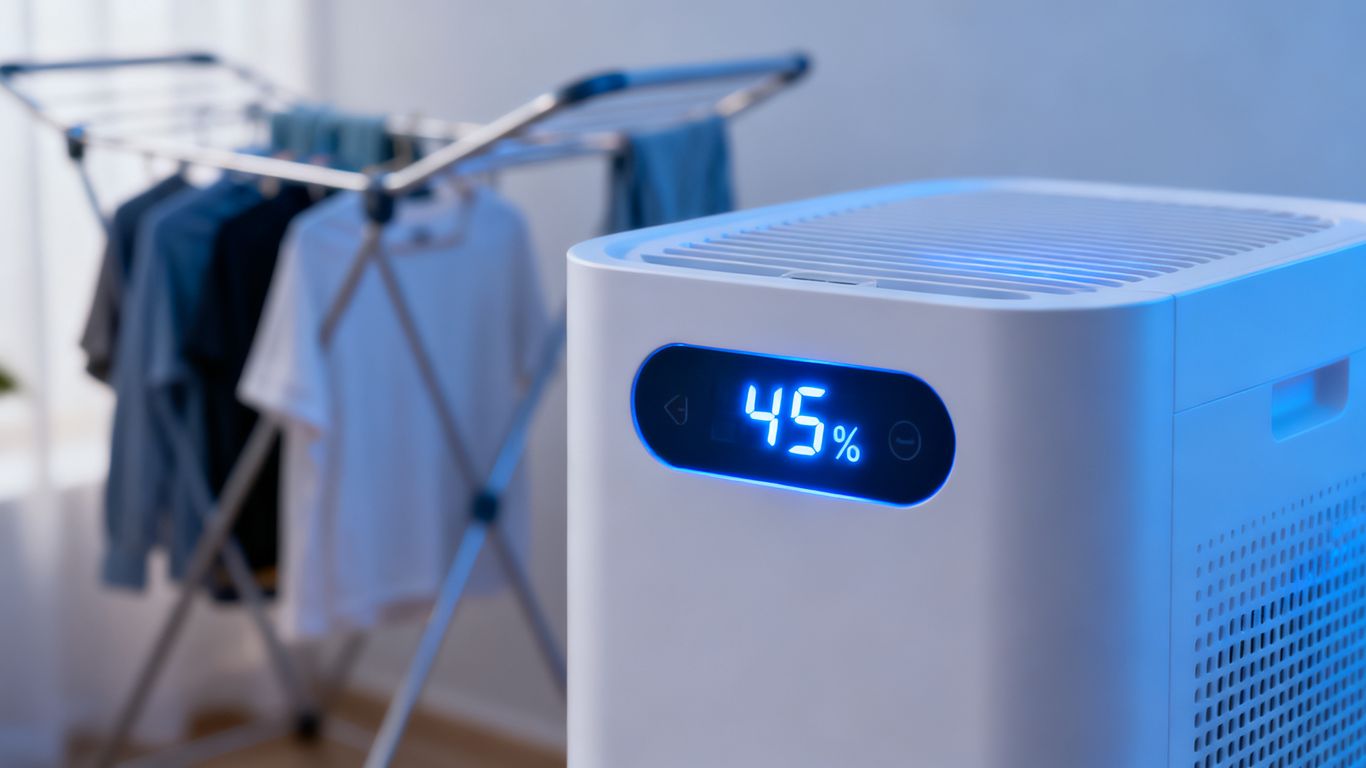 Modern laundry care relies on specific features that allow the machine to adapt to the heavy moisture output of wet clothes. When shopping for reliable hardware, look for units designed by experts who understand the unique engineering requirements of humid, tropical environments. ### The importance of a dedicated laundry mode A dedicated laundry mode pushes the compressor to run continuously, ignoring standard ambient humidity targets to ensure the clothes are the primary focus. This setting is often designed to optimize the air-exchange rate, which provides the most aggressive drying capability without relying on standard appliance settings. ### Digital humidistat requirements for consistent performance Digital sensors provide the precision needed to stop the unit exactly when the laundry reaches the desired level of dryness to prevent over-drying. 💡 Real-World Scenario Imagine you arrive home after an afternoon downpour with a bag of wet gym gear and a heavy weekend load that needs to be ready by morning. If you lack a responsive sensor, your machine may run until the room is bone-dry, wasting electricity when your clothes were already finished. The following steps ensure your system remains consistent: 1. Test the sensor for accuracy by comparing it to a standalone hygrometer. 2. Calibrate the laundry profile based on typical load sizes in your household. 3. Regularly check that the intake vents are free of lint and dust. 4. Set the auto-off timer based on the typical weight of a full load. Taking these preventative measures ensures your Aerofy engineering is working for you, not against you. ### Energy efficiency ratings and power consumption expectations Look for units with high-efficiency rotary compressors that can provide high extraction rates without spiking your electricity bill. This is particularly relevant if you run your unit through the night to process damp laundry loads. ## Safety tips and maintenance for laundry care
Safe operations involve keeping a clear pathway for air so the internal compressor does not overheat. Proper maintenance keeps your unit running for years as a vital piece of your home infrastructure. ### Preventing risks from proximity to heavy fabric Never drape heavy blankets directly over the intake or exhaust vents of your dehumidifier. Doing so creates a fire hazard and forces the internal motor to work harder than it should, potentially shortening the item’s lifespan. ### Regular filter cleaning to ensure optimal airflow The pre-filter on your dehumidifier catches dust and lint shed by drying fabric, which can quickly clog the system. Cleaning these filters every two weeks maintains the airflow necessary for the unit to remove moisture effectively. ### Managing continuous water collection tank drainage Using the continuous drainage tube is superior to the collection tank when drying multiple loads in a row. It eliminates the need to pause the machine to empty the bucket, which is a common point of disruption during a long laundry cycle. ## Pro tips for speeding up the drying process Drying clothes faster allows you to revert your room back to its original state sooner, which reduces the amount of time you spend monitoring the process. These expert adjustments often provide the biggest gains in speed. ### Alternating between natural ventilation and dehumidification Briefly airing out the space before starting the drying process can help displace initial excess moisture. This creates a fresh baseline so the dehumidifier does not start with an unnecessarily high humidity load right from the beginning. ### Using an auxiliary fan in conjunction with the dehumidifier An auxiliary floor fan helps circulate the dry air exiting the dehumidifier back around to the far side of the laundry rack. This removes stagnant air pockets and ensures that your portable dehumidifier solutions are working at maximum capacity. ### Optimizing clothing density on the drying rack Grouping items of similar material can help you determine the final drying time more accurately. Avoid packing too many items together, as this traps moisture and forces the machine to stay on longer than necessary. ## Conclusion Successfully using a dehumidifier for laundry transforms a once-tedious chore into a seamless, automated process that preserves the quality of your favorite garments. By focusing on proper room ventilation, maintaining a sensible load distribution, and utilizing the advanced engineering of your unit, you can enjoy fresh, dry clothing regardless of the weather outside. Consider visiting our shop to explore units built specifically to handle the persistent humidity of tropical climates. ## What is the best room for indoor drying? The best room for drying is one that is small and can be easily closed off to concentrate the dry air. Bathrooms, spare bedrooms, or utility closets work perfectly as long as they offer enough space to set up a drying rack without obstructing the airflow. ## How long does it usually take to dry a load? Drying times vary based on the fabric, the total load weight, and the capacity of your dehumidifier. In a well-managed room with a modern unit, a typical load of mixed cottons usually dries in four to six hours. ## Is it better for my clothes than using a tumble dryer? Yes, using a dehumidifier is much gentler on fabrics because it uses low-temperature air instead of high heat. This prevents the shrinking, fading, and wear that tumble dryers often cause over time. ## Can I leave the unit running unattended? Modern machines are designed with safety features like overflow sensors and auto-shutoff timers, making them safe for unattended use. However, you should always ensure the vents are clear and the unit is on a stable, flat surface before you let it run while away. ## Do I need a special mode for drying clothes? While not strictly necessary, a dedicated laundry mode is highly recommended because it adjusts the fan speed and humidity targets automatically. If your unit lacks this, simply running it on the lowest humidity setting at the highest fan speed is usually sufficient. ## Will using a dehumidifier increase my electricity bill significantly? When compared to the energy impact of a traditional heated tumble dryer, a dehumidifier is generally much cheaper to run per load. The exact cost depends on your local electricity rates and the wattage of your device, but it is typically a more economical alternative. ## How often should I empty the water tank? If you are not using a continuous drainage hose, you may need to empty the tank once or twice during a long drying cycle. The frequency depends on the humidity of the room and the amount of moisture your laundry releases, so it is best to check the tank indicator periodically.