
Key Takeaways
Transitioning between climate control settings helps maintain a healthy indoor environment during humid months. Understanding how to manage your unit’s settings is the first step toward effective moisture control.
- Dry mode removes excess moisture without overcooling a room.
- Maintaining indoor humidity between 40-50% prevents mold spores from thriving.
- Daily air circulation is crucial for preventing stagnant, musty air.
- Proper maintenance of drainage hoses and filters extends the life of your equipment.
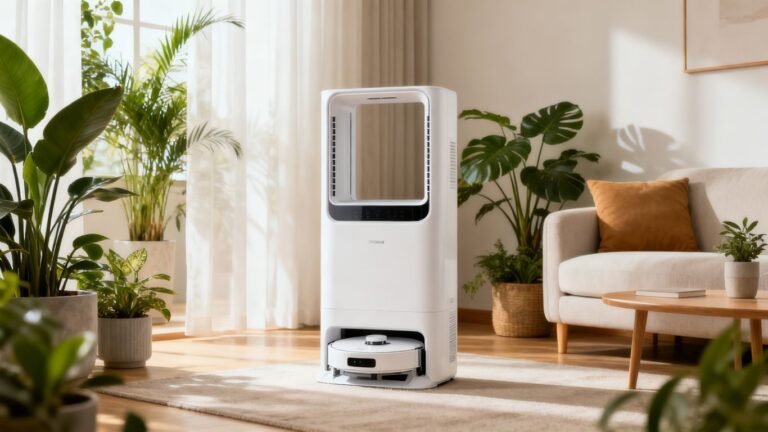
- High-performance solutions like the Aerofy DualCore 20 provide superior moisture extraction compared to basic aircon settings.
Understanding how air conditioner dehumidifier mode works
The internal mechanics of moisture removal
When you activate the dehumidification function, the unit passes warm indoor air over a cold evaporator coil. As air temperature drops rapidly at the contact surface, it reaches its dew point, causing water vapor to condense into liquid. This liquid is captured by a drain pan and directed outside via a constant runoff hose. Unlike typical air conditioner dehumidifier mode operations, this process is tuned to ensure the coil remains cold enough to facilitate consistent condensation without triggering excessive cooling of the overall room air.
Difference between standard cooling and dry mode
Standard cooling settings prioritize lowering room temperature by constantly cycling the compressor until a thermal target is reached. In contrast, dry mode is programmed to prioritize latent heat removal. While standard cooling is ideal for intense heat, it might shut off once the target temperature is hit, leaving the room damp. This specific setting remains active to drop moisture levels, making it a highly effective balancing act for tropical living where the air feels heavy even if the mercury hasn’t risen significantly.
Impact on fan speed and compressor regulation
In this mode, the system typically locks the fan into a low and constant speed to maximize contact time with the evaporator coils. By keeping the airflow steady and slow, the unit ensures more moisture is stripped away. The compressor performs in short, intermittent bursts to maintain the coils at the precise temperature where water readily condenses, rather than running continuously to fight heat transfer.
Benefits of using dry mode in your home

Improving indoor air quality
Managing humidity levels is essential for breathing easier in any indoor space. High indoor humidity often leads to trapped pollutants and pollutants that cling to moisture droplets in the air. By stripping the air of excess water, you reduce the medium required for these particulates to linger.
Reducing the risk of mold and mildew growth
Excess moisture is the primary driver for biological growth in household corners. When humidity stays consistently high, spores easily settle on furniture and walls. Keeping air dry is an effective deterrent against the spread of potential allergens common in humid Southeast Asian climates.
Preventing dust mite proliferation
Dust mites thrive in environments where humidity consistently exceeds 60%. Reducing the volume of airborne moisture directly impacts their lifecycle throughout the home, particularly in bedrooms. Our team at Aerofy emphasizes this, as managing humidity is a foundational step in maintaining a cleaner, more hygienic home environment.
Increasing personal comfort during clammy weather
When the air feels oppressive, it is usually because the humidity is high, hindering your body’s ability to regulate its own temperature through evaporation. The following table illustrates how different modes affect the room’s "perceived" comfort:
| Mode | Main Focus | Energy Profile | Comfort Outcome |
|---|---|---|---|
| Cooling | Temperature Reduction | High Power | Chilly and lower humidity |
| Dry Mode | Moisture Extraction | Moderate Power | Neutral and less sticky |
| Fan Only | Air Circulation | Low Power | Sticky if room is humid |
By choosing the right setting for the local weather, you avoid the discomfort of "over-cooling" a space that only requires a bit of freshening.
When to choose dry mode over cooling mode

During rainy or transitional seasons
Inter-monsoon periods often bring sudden rain showers that leave the atmosphere saturated. Rather than turning your air conditioner down to freezing temperatures, dry mode allows you to stay comfortable without an excessive drop in room temperature.
When ambient temperatures are comfortable but humidity is high
There are many days where the air temperature sits at a pleasant 25°C, yet the stickiness makes it unbearable. Using this setting allows you to address the humidity without needing to layer up with sweaters to counter the cooling cycle.
Comparing energy efficiency between operation modes
Because dry mode usually operates the compressor with less intensity, it often uses less electricity than the full-capacity cooling mode. This makes it a great way to manage your climate control budget. However, for continuous moisture suppression, dedicated equipment always maintains higher efficiency than trying to force an air conditioner to perform functions it was not engineered for.
Limitations of dry mode during extreme heat waves
When temperatures reach dangerous highs, this mode will not protect you from heat stress. In high-heat scenarios, the unit simply cannot move enough heat out of the room to keep occupants safe. Only full cooling mode can handle the thermal load of a heat wave.
Best practices for operating your air conditioner in dry mode

Ensuring proper room sealing for efficiency
Efficiency relies on keeping the treated air inside. Ensure all windows are closed and that door sweeps are tight to prevent humid air from leaking into the room while the unit is trying to dry the space out.
Managing duration and automatic cycle settings
Don’t leave the unit running indefinitely. Rely on timers or smart sensors to cycle the unit off once the air moisture reaches a comfortable level.
Considerations for room size versus unit capacity
If you have a massive open-plan space, a single wall-mounted ac unit will struggle to distribute air effectively. To manage humidity in larger areas, follow these steps:
- Measure the total floor area in square meters.
- Ensure your unit’s BTU or cooling power matches that footprint.
- Position your unit away from obstacles like bulky furniture.
- Use an additional air circulation fan to move air toward the unit.
By following these steps, you allow the evaporator coils to process the air more uniformly throughout the room.
Avoiding over-drying the interior climate
While humidity is an enemy, extremely low humidity can cause wood furniture to crack and irritate dry throats. Aim for the 40-50% sweet spot.
Maintenance requirements for air conditioner drying cycles
Cleaning air filters to maintain airflow
Your unit requires unobstructed airflow to condense moisture efficiently. Dust-clogged filters act as a block, forcing the compressor to work harder and reducing dehumidification performance. Aim to wash out your primary mesh filters every month.
Keeping condensate drain pans and hoses clear
Condensation creates a steady water flow that must be exited from the unit. If the drain pan or the flexible hose becomes clogged with debris or mold growth, you risk water leaks inside your home. Check the drainage path for obstructions once a quarter.
Inspecting internal components for signs of excess moisture
Periodically observe the blower wheels and surrounding fins. If they seem unnaturally damp or showing signs of discoloration, it is a sign that moisture is not being evacuated as intended.
Scheduling routine professional servicing
Professional technicians reach deep into the unit to clean the coil fins. This deep clean is vital, as the Aerofy philosophy reminds us that preventive care is much cheaper than replacing a motor damaged by corrosion or excess biological buildup.
Limitations and specific use cases to consider
Why it does not fully replace a standalone dehumidifier
Standalone units are built to run 24/7 with independent water tanks and sensors designed specifically for humidity management. An air conditioner is primarily a heat-exchange machine, meaning it will never match the granular controls of a purpose-built Aerofy solution when it comes to moisture-only tasks.
Analyzing noise levels compared to standard cooling
Because the fan runs steadily in dry mode, some users find the constant hum more noticeable than the periodic cut-out of cooling mode. This is simply the trade-off for continuous air processing and water vapor removal.
Handling units without adjustable humidity settings
Many entry-level units have a "dry" button, but they lack a digital humidistat, meaning they run until you manually shut them off. If your unit lacks precision controls, use a cheap external hygrometer to check the air quality yourself.
Signs that your system requires a repair technician
If the water is dripping back into the room or you notice a persistent sour smell regardless of how much you use the unit, the drainage system is likely compromised. Book a professional inspection before the accumulation causes internal electrical shorts.
💡 Real-World Scenario
Imagine you are living in a walk-up apartment during the rainy season. You come home to find the sheets feeling clammy and a faint smell of dampness near your closet. You have an AC unit in the bedroom that you only use at night, but you don’t want to freeze at 18°C. By switching that unit to dry mode, you effectively pull the moisture from the fabric and the air within an hour, creating a fresh, crisp atmosphere for sleep without turning your room into an icebox.
Conclusion
Using your air conditioning settings wisely can transform your living space from a damp environment into a comfortable retreat, proving that sometimes the best climate control is knowing how to manage moisture rather than just cooling the air.
Frequently Asked Questions
Does running dry mode use more electricity than cooling?
Usually, dry mode consumes less power because the compressor cycles intermittently rather than running at constant high intensity, though this depends entirely on the size of your unit and the initial humidity level of your home.
Will dry mode make the air too dry for my plants?
It is unlikely to cause issues for indoor plants unless you run it for extended periods in a very small, poorly ventilated room as it typically targets a comfortable range rather than desert-like dryness.
Can I use dry mode for 24 hours straight?
While you technically can, it is not recommended for home ac units as they are not designed for the continuous runtime of a standalone dehumidifier and may experience strain on the compressor over time.
Why does my air conditioner leak water when in dry mode?
Leaking is almost always a sign that the condensate drain line is clogged, preventing the water condensed during the process from exiting the unit safely.
Should I turn on the fan speed separately in dry mode?
Most modern AC units automatically switch to a low fan speed when you select dry mode because it is the most efficient speed for moisture removal; you generally do not need to override this setting.
How do I know if the humidity is actually dropping?
Using an inexpensive digital hygrometer is the most accurate way to verify that your unit is effectively bringing the relative humidity down to the optimal 40-50% range.
Is dry mode effective for eliminating persistent musty smells?
It will help reduce the moisture that contributes to smells, but if a musty odor persists, it usually indicates that mold is already growing inside your filters or ductwork and requires a deep cleaning.